
W̱MÍYEŦEN Nature Sanctuary Society (WNSS): 1979 – to present
(formerly the Greater Victoria Greenbelt Society)
WNSS is a registered non profit society S-0014941 with an elected, volunteer Board of Directors. As a registered society WNSS has a constitution and a set of by-laws to which we adhere.
Mission
“To foster respect for nature and promote the protection of natural areas for the benefit of all future generations through environmental conservation, restoration, education, and cultural activities in alliance with local First Nations.”

Vision
“A world with protected natural areas that support the well being of the future generations of all species.”
The W̱MÍYEŦEN Nature Sanctuary Society considers the natural world to be a precious and necessary partner to the healthy existence of all beings including humans. We believe that all aspects of nature deserve to be respected and protected now and for future generations.
In spending time in nature, we undergo a process of deepening our insight and awareness, a process in which we strengthen our connection with the natural environment. This fundamental shift in our perspective allows us to realize our ties and responsibility to all life.
By mindfully cultivating our relationship with nature, we can re-awaken our understanding of the critical interdependence of all life, and naturally be inspired to protect it from destructive practices.
Beneficial Actions:
- Encourage a respectful and wholistic connection to nature.
- Protection and conservation of nature for its own sake and future generations.
-
- Restoration and maintenance of ecosystems that support endangered species, plant communities and the Millstream watershed.
-
- Invasive non-native species removal
- Planting or seeding of native species of plants.
-
- Established Conservation Covenant that protects the land in perpetuity and is inclusive of First Nations traditional concerns.
- Restoration and maintenance of ecosystems that support endangered species, plant communities and the Millstream watershed.
-
- Collaborative and supportive relationship with local First Nations – W̱SÁNEĆ Peoples.
-
-
- Creating opportunities for the return of traditional cultural use and land management
- Research that combines Scientific Naturalist Traditions (SNT) and First Nations Traditional Ecological Knowledge (TEK) – Species Kinship Mapping Program
- Nurturing connections between regional community and local First Nations (W̱SÁNEĆ peoples) to foster respectful understanding.
- 4. Providing space for activities that foster balanced health and wellbeing through time in nature.
-
-
-
-
- Mindfulness and Meditation
- Nature/Forest Therapy
- Support cultural expression through the arts.
-
-
WNSS committed to respectful relationships with First Nations Peoples
Aug. 2022: WNSS (GVGS) Board of Directors adopted the 5 following resolutions to move the WNSS towards an equitable partnership with W̱SÁNEĆ First Nations on whose territory the W̱MÍYEŦEN Nature Sanctuary (formerly Mary Lake) is situated.


Current Project: W̱MÍYEŦEN Nature Sanctuary (formerly Mary Lake)
Conservation, Education, Culture and Reconciliation are the four pillars that will guide and support our work at the W̱MÍYEŦEN Nature Sanctuary.
WNNS would like to acknowledge the importance of initial donors who supported the Mary Lake initiative. Without their generous support we would have been unable to launch this campaign.
- The W̱MÍYEŦEN Nature Sanctuary Society (formerly Greater Victoria Greenbelt Society) began working with our supporters in the general public, local businesses, hiking and nature clubs, and environmental organizations to raise the additional funds needed to do research of species at risk, habitat restoration and development of the Nature House.
- In November of 2018 we signed a Declaration of Partnership with the Tsartlip First Nation who also had a desire to keep the property in it’s natural state for future generations. The WNSS is looking forward to continuing our collaborative partnership with the Tsartlip First Nation to determine how the W̱MÍYEŦEN Nature Sanctuary and Highlands Nature House can be managed to promote conservation, respect for nature and cultural values.
- On March 29th 2019 we received funding from the Ministry of Environment and Climate Change Strategy of BC to retire the remaining mortgage thus ensuring conservation of the property in perpetuity.
- A covenant with the Provincial government acknowledges the property as conserved nature sanctuary with monitored public access to ensure the protection of species at risk and endangered plant communities found there.
- We are now doing research and preparing for the rezoning process to change the property from Greenbelt II Residential to a special conserved area with a nature house for public use for hosting retreats, workshops, art programs and classes focused on nature and ecology. New upgrades to the original residence will be done to meet building codes for public assembly.
- This is a unique project that brings together a non profit charity (GVGS), government, a local First Nations and Regional community to protect the natural world and build our relationships to support reconciliation.
Follow this link to learn about how the sanctuary supports the local District of Highlands Official Community Plan
Constitution and Bylaws
Download our constitution and bylaws here.
See What We Have Been Doing for Nature and Community
Our Newsletter Archive
W̱MÍYEŦEN Nature Sanctuary Board of Directors and Advisors
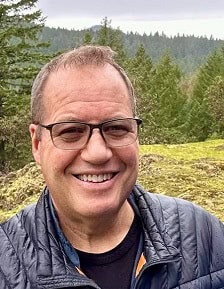
Philip Cameron(Chair)
Philip lives in the beautiful Highlands forest with his beloved wife and their cat. He is proud father and grandfather who loves nature and nourishing family and friends with food. He has extensive experience managing not- for profit organizations, strategic planning and policy development.

Libby McMinn (Secretary)
Libby McMinn had the privilege of a childhood lived amongst the forests of the Highlands on the traditional and unceded territory of the W̱SÁNEĆ people. Post-secondary education took her to Ottawa and Calgary where she obtained a Bachelor of Arts and Master of Social Work. She worked in community based social services and later, in public education and awareness programs on environmental issues, and volunteered with environmental and community development organizations. Libby served on the Advisory Committee for the development of the District of Highlands Integrated Community Sustainability Plan and was a founding member and co-chair of the Highlands Community Garden.

Cheymus McNulty (Director)
As a current Grade 8 teacher, Cheymus is dedicated to continually improving as an educator and human. He is working to deepen his understanding of SENĆOŦEN (the W̱SÁNEĆ language) and refine his approach to teaching mathematics. However, his passion lies in getting students outside and fostering meaningful connections with their natural environment. Through his work in Indigenous education, he attempts to do his part to weave land-based learning, cultural teachings, and ecological stewardship into the public education system.
To that end, Cheymus leads initiatives such as salmon egg programs and a collaborative farm project, helping students develop an appreciation for our unique local ecosystems. He strives to help others recognize the interdependence between humans and non-human beings, as well as our shared responsibility in caring for the Land as it cares for us. A vision shared by the W̱MÍYEŦEN Nature Sanctuary Society.
HÍSW̱KE (Thank you).
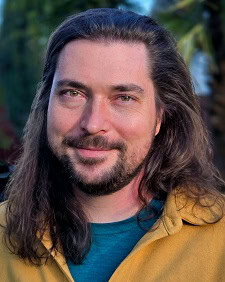
Kyle Rasmussen (Director)

Bob McMinn (Director)
Bob is a retired forest ecologist with over 40 years of professional experience throughout BC. He is passionate about keeping as much of the Highlands as possible in its natural state. This motivated him to start the Highlands District Community Association and enter politics to become the first Mayor of the District of Highlands. During his term of office, parklands were increased to 30% of the Highlands. Increasing parkland and protected space is a thrust that subsequent councils have continued. In 2010 Bob recognized the potential for the Mary Lake property as a great addition to green space in the Highlands.
Awards: Queen’s Diamond Jubilee, Canada 125 and BC Good Citizenship Medals and the District of Highlands Freedom of the Municipality are recognition of his many years’ service to the Highlands and the Greater Victoria Community.
Advisors

Tom Sampson (TTASELEK)
A respected elder of the Tsartlip Nation and a vocal environmental advocate who served as Chief of Tsartlip for 24 years, and chairman of the South Island Tribal Council for 22 years. He launched the Coast Salish Sea Council, participating in the proposal for the Marine Protected Area at Race Rocks in 2000 and raising awareness about the impacts of the proposed LNG plant and Bamberton Development on the Saanich Inlet.

Ben Van Drimmelen
BSF, LLB Retired, Biologist and Barrister
Ben worked as a wildlife biologist, habitat biologist and natural resources lawyer for the BC government and for the independent Forest Practices Board. He has been on boards with the Land Trust Alliance of BC, the Victoria Natural History Society and Habitat Acquisition Trust
W̱MÍYEŦEN Nature Sanctuary
1772 Millstream Rd,
Victoria, BC V9B 6E4
W̱MÍYEŦEN Nature Sanctuary Society
1772 Millstream Rd. Victoria, BC. V9B 6E4
WSÁNEC Coast Salish
W̱MÍYEŦEN Nature Sanctuary lies within the traditional territories of the WSÁNEC (Saanich) Coast Salish Peoples.
We recognize the integral role the ancestors of the WSÁNEC Coast Salish Peoples play as past and present day stewards of the Highlands lands.